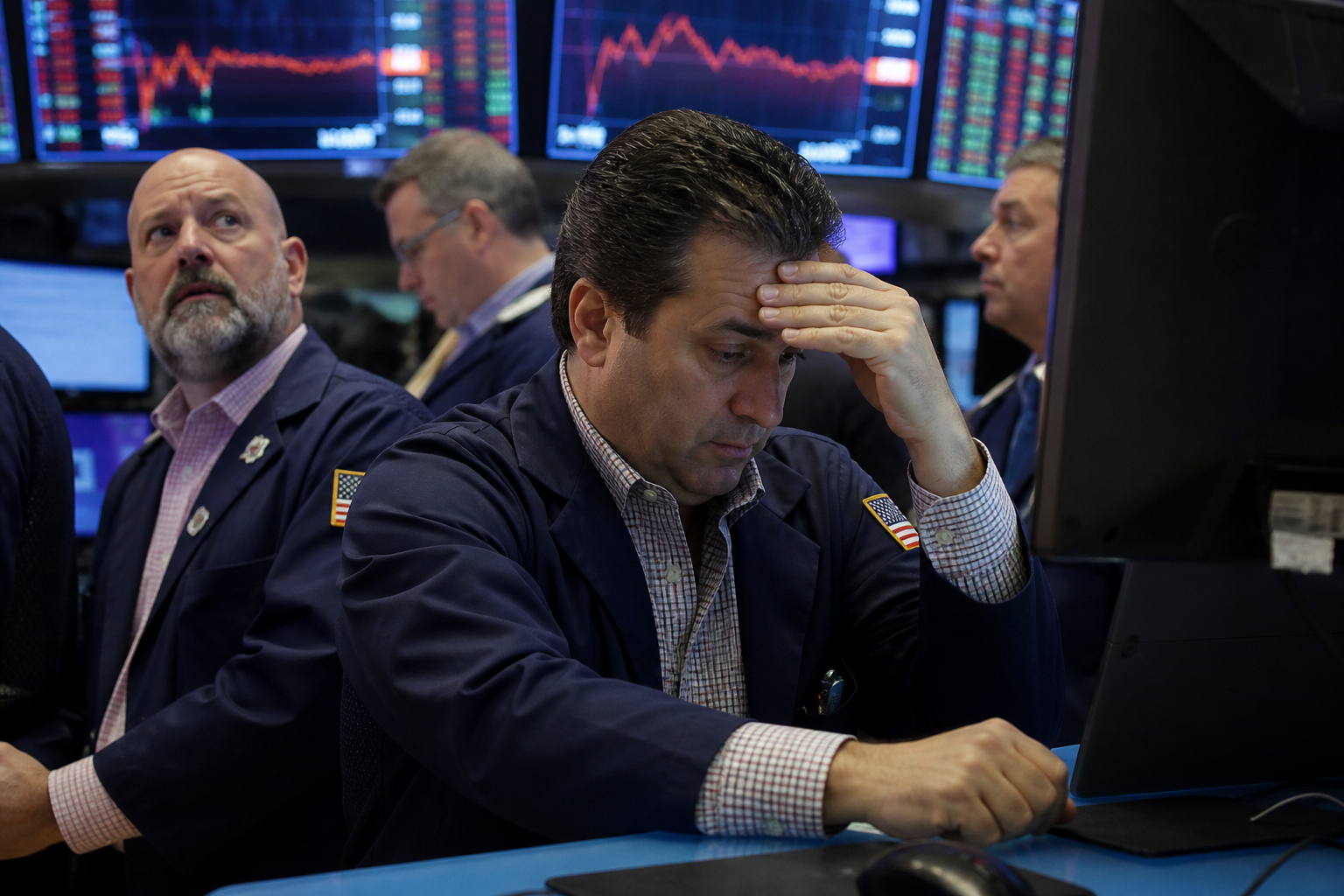
Nvidia shares fall as the resignation report hits the tape
Nvidia shares fell after reports that Jensen Huang had resigned as chief executive, according to MarketScreener, which tied the move to a session that also ended with lower U.S. stocks and rising Treasury yields (MarketScreener). The report gave traders an immediate read on how the market treated the news: as a source of uncertainty, not as a confirmed operating shift at the chipmaker.
That distinction matters because the underlying leadership story remains unsettled in the material available to the crawl. Multiple outlets reported that Huang had resigned and that Colette Kress would take over as interim chief executive, but the crawl did not turn up a primary Nvidia statement confirming the move (The New Indian Express, Daily Excelsior). Until the company spells out what happened, investors are left to trade around fragments.
A market move shaped by uncertainty
MarketScreener’s account places Nvidia’s decline inside a broader risk-off session. It said U.S. stocks ended lower after a volatile day, while Treasury yields climbed (MarketScreener). That mix gives the Nvidia move a second reading. The stock did not fall in isolation. It moved in a market that was already uneasy.
For portfolio managers, that matters. A single-stock drop can come from company-specific news, but a wider slide in equities can tell a different story. In this case, the broader tape suggests traders were already trimming risk. Nvidia’s decline then became part of a session that was weak across asset classes, not a lone verdict on the company.
The report also left open the question of how much of the reaction was tied to Huang himself. MarketScreener did not provide a company explanation, and the crawled material did not include a fresh Nvidia comment. That leaves the first trading response anchored more to the shock of the headline than to a confirmed change in operations, strategy, or guidance.
The reporting remains fragmented
The resignation narrative is still scattered across outlets. The New Indian Express said Colette Kress was taking over as interim chief executive as Nvidia faced scrutiny over alleged relationships involving a suspected Chinese intelligence asset (The New Indian Express). Daily Excelsior said Huang resigned on Thursday and that Nvidia named Kress, identifying her as executive vice president and chief financial officer (Daily Excelsior).
Other outlets tied the story to separate claims about Huang’s personal life and to national security concerns. NDTV Profit said the resignation followed revelations about Huang’s personal life, including his November 8 admission of an affair and reports that he was involved with an employee who reports to him (NDTV Profit). Outlook India reported that lawmakers were examining Huang’s reported association with businesswoman Alice Huang, alleged Chinese intelligence links, and questions around advanced AI chip exports to China (Outlook India).
None of those reports resolves the central question for traders: what, exactly, changes at Nvidia if the leadership transition is temporary, contested, or still under review. The crawled material does not establish whether Kress has assumed day-to-day control or what authority she would have in an interim role.
What traders may be pricing now
The first pass through the tape suggests investors may be separating the stock move from the full legal or governance story. That is the cleaner read for market desks. Nvidia is not being priced only on the reported resignation. It is being priced on the uncertainty around it, and on what that uncertainty could mean for the company’s near-term stability.
That same uncertainty can spill into other AI names. MSN framed the resignation as a blow to the AI boom Huang helped build, though the page was not accessible in the crawl beyond the headline (MSN). If traders begin to see the story as more than a one-off personnel issue, then the reaction can widen from Nvidia into the rest of the group that has traded on the same AI narrative.
Still, the session data in MarketScreener points to a market that was already under strain. Nvidia’s drop, in that setting, may say as much about fragile risk appetite as about the company itself. Treasury yields rising while stocks fell gives traders one more reason to treat the move as part of a broader unwind rather than a clean read on Nvidia alone (MarketScreener).
What to watch next
The next piece of this story will come from Nvidia itself. The crawl does not include a company statement, and that leaves the reporting incomplete. Traders will be looking for confirmation on whether Huang’s reported resignation is final, temporary, or tied to an internal review.
They will also be watching whether the market treats Kress as a continuity choice or as a sign that something more serious is under way. For now, the first move in Nvidia shares tells a narrow story: the market dislikes uncertainty, and this report gave it more of that before the opening bell even settled.