AGCO Corporation builds the machines that feed the world — tractors and combines sold under the Fendt, Massey Ferguson, and Valtra brands, serving farmers in 140 countries. When its leadership decided to pursue AI adoption at enterprise scale, they ran into a pattern they recognised from previous technology rollouts: employees were already experimenting, privately, on personal devices.
Starting with friction, not features
AGCO's Director of Strategic Partnerships, Aryn Drawdy, articulated the philosophy that shaped the programme: "I think asking how AI can help you is a mistake. I think asking where do you see gaps today, where are your friction points — that's where we have to start." That framing changed what the initial discovery phase looked like. Rather than assigning use cases from the top, AGCO asked employees where their work was slow or fragile, and built the agent programme around those answers.
Governance as infrastructure, not oversight
At a company leadership meeting with roughly 2,200 attendees, AGCO asked who wanted to start building AI agents. About 900 people raised their hands immediately. The company started training the next day. Rather than a formal approval process, it created a Microsoft Teams community where makers could ask questions, share progress, and support each other. Expert oversight was embedded in the community itself, not applied after the fact.
Manufacturing workflows as the test case
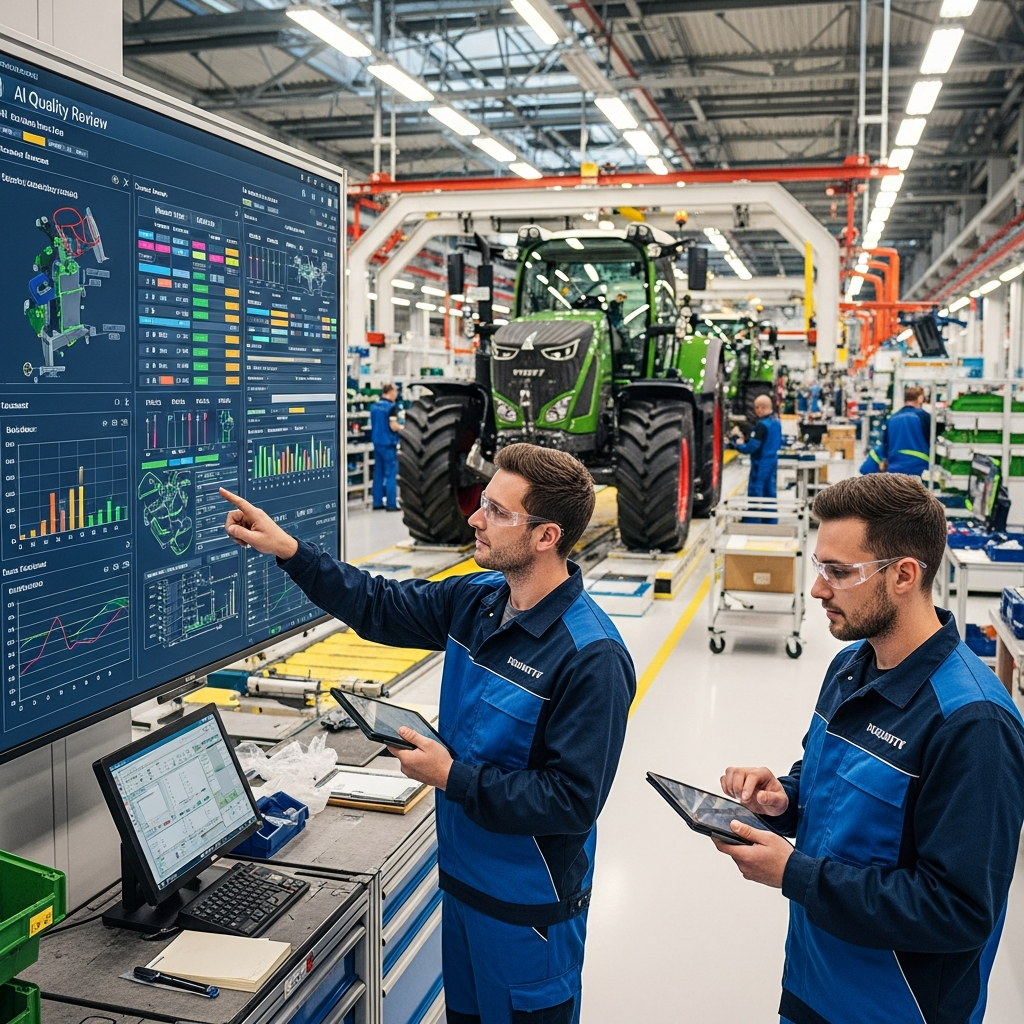
The most significant early gains came in quality and warranty processes. Product improvements are often implemented as running changes within active production builds, requiring coordination across multiple teams. These handoffs don't follow a linear process, and issues stretched over weeks as small groups of experts interpreted data, validated findings, and aligned teams. Agents built using Microsoft Copilot Studio brought relevant context into these coordination workflows automatically. Quality reviews that had taken weeks shrank to roughly an hour.
What they would do differently
AGCO's leadership identified the governance model as the element that made speed possible. By treating AI literacy as a precondition for building — not an afterthought — the firm gave its 900 makers a foundation to move quickly without creating compliance exposure. VP and CDAIO Todd Bailey's framing: AI is not about experimenting for its own sake, but about applying it where operational impact is measurable.
“This is not about experimenting with AI for its own sake — it's about applying it where it matters most. Together with Microsoft, we're building an AI foundation that helps AGCO move faster, reduce friction, and equip our teams to make better decisions for the farmers and customers we serve.”