SharePoint gets a new job
Microsoft is pushing SharePoint into a new role inside Microsoft 365 AI. In a SharePoint Blog post dated Oct. 14, Kripal Kavi said Copilot and agents in the Copilot app, Teams, and SharePoint can create, contribute to, curate, and reference a team knowledge base stored in SharePoint. Microsoft says the feature is in Frontier Preview and is meant to reduce fragmented and outdated information while giving agents more context for team tasks and questions. Microsoft SharePoint Blog
That framing changes the way Microsoft describes SharePoint. The product has long been sold as a place to keep files and sites in order. In this version, SharePoint becomes the shared reference layer that Copilot and agents can read from and add to.
How Microsoft says the system works
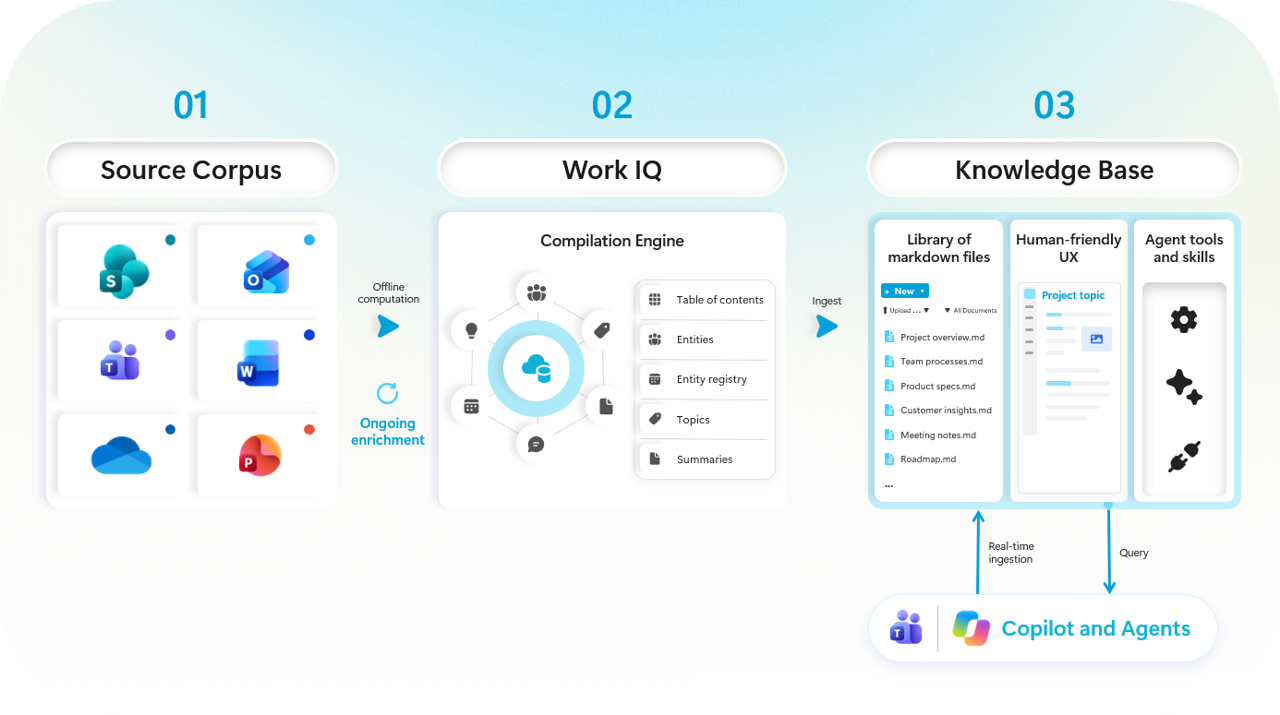
Microsoft says the team knowledge base is a specialized library of interlinked, agent-friendly markdown files created by Copilot through Work IQ's native knowledge compilation engine. The company says team members can feed the system material from email, messages, meetings, and content already stored on SharePoint sites. Copilot then organizes that material into a knowledge base for both people and agents. Microsoft SharePoint Blog
Useful information is spread across too many places, and a large share of it goes stale. Microsoft says the knowledge base is intended to keep answers grounded in team context rather than scattered documents or half-remembered chats. The company does not spell out approval steps, versioning rules, or deletion controls in the Oct. 14 post. Microsoft SharePoint Blog
Microsoft also does not say how permissions from source material carry over into the knowledge base, or how access is limited when both people and agents can read from it. For enterprise buyers, that omission may matter as much as the feature itself.
Microsoft sells speed and tighter retrieval
The company says internal testing found responses were up to four times faster and 30% more token-efficient when the knowledge base was used to retrieve content and perform team tasks. Microsoft does not publish the test size, methodology, workload mix, or the baseline system used for comparison. Still, the numbers give the company a concrete claim about the economics of retrieval in enterprise AI. Microsoft SharePoint Blog
For Microsoft, the pitch is not limited to convenience. If Copilot can pull from a cleaner, team-specific source instead of searching across disconnected files and chats, the company is arguing that it can answer faster and spend fewer tokens doing it. That matters for buyers trying to measure where AI time and cloud cost go.
Microsoft says its Applied Science teams are working on corpus enrichment research alongside content processing work to keep improving how enterprise content becomes usable knowledge. The company does not go into detail about those methods in the blog post, but the reference signals that SharePoint's new role is tied to Microsoft’s broader AI pipeline, not a one-off feature. Microsoft SharePoint Blog
The product strategy behind the move
The broader strategy is easy to see. Microsoft is binding SharePoint, Copilot, and Teams into one knowledge flow. Email, messages, meetings, and site content feed the knowledge base. Copilot and agents then use that base to answer questions and take next steps. That makes SharePoint less of a file cabinet and more of a shared memory system for Microsoft 365.
The company gave three examples in the post. Legal teams can collect scattered knowledge for agreements and contracts. Engineering teams can combine specifications and product history for coding agents and onboarding. Sales teams can organize account history for next-step recommendations and account snapshots. Microsoft SharePoint Blog
Those examples point to a common enterprise need: each team wants a current source of truth, but each team stores information differently. Legal cares about accuracy and traceability. Engineering cares about context and technical history. Sales cares about account detail and timing. Microsoft is betting that a SharePoint-based knowledge base can serve all three without forcing them into separate tools.
What buyers will want to know next
The Oct. 14 post leaves several practical questions open. Microsoft does not say when the feature will leave Frontier Preview or which customers can test it now. It also does not explain how content is approved, how conflicting versions are resolved, or how stale material is removed once it enters the knowledge base. Microsoft SharePoint Blog
That matters for IT leaders because a team knowledge base is only as useful as its governance. If the system can ingest email, meetings, messages, and SharePoint site content, then administrators will want clear rules for access, retention, and editing rights. Microsoft has not published those controls in the blog post.
The timing also suggests this is part of a larger push. The SharePoint Blog index shows earlier AI posts on Sept. 25, when Microsoft said SharePoint AI innovations reached general availability, and Sept. 30, when it rolled out Copilot in SharePoint. The Oct. 14 post extends that run by placing SharePoint inside a more agent-driven workflow. SharePoint Blog index
For Microsoft 365 buyers, the message is plain enough. SharePoint is no longer being described only as a place where content lives. Microsoft now wants it to be the source file that Copilot and agents consult when they need the team version of the truth. The next test is whether organizations trust it enough to let that knowledge base absorb the daily flow of email, meetings, messages, and site content. Microsoft SharePoint Blog