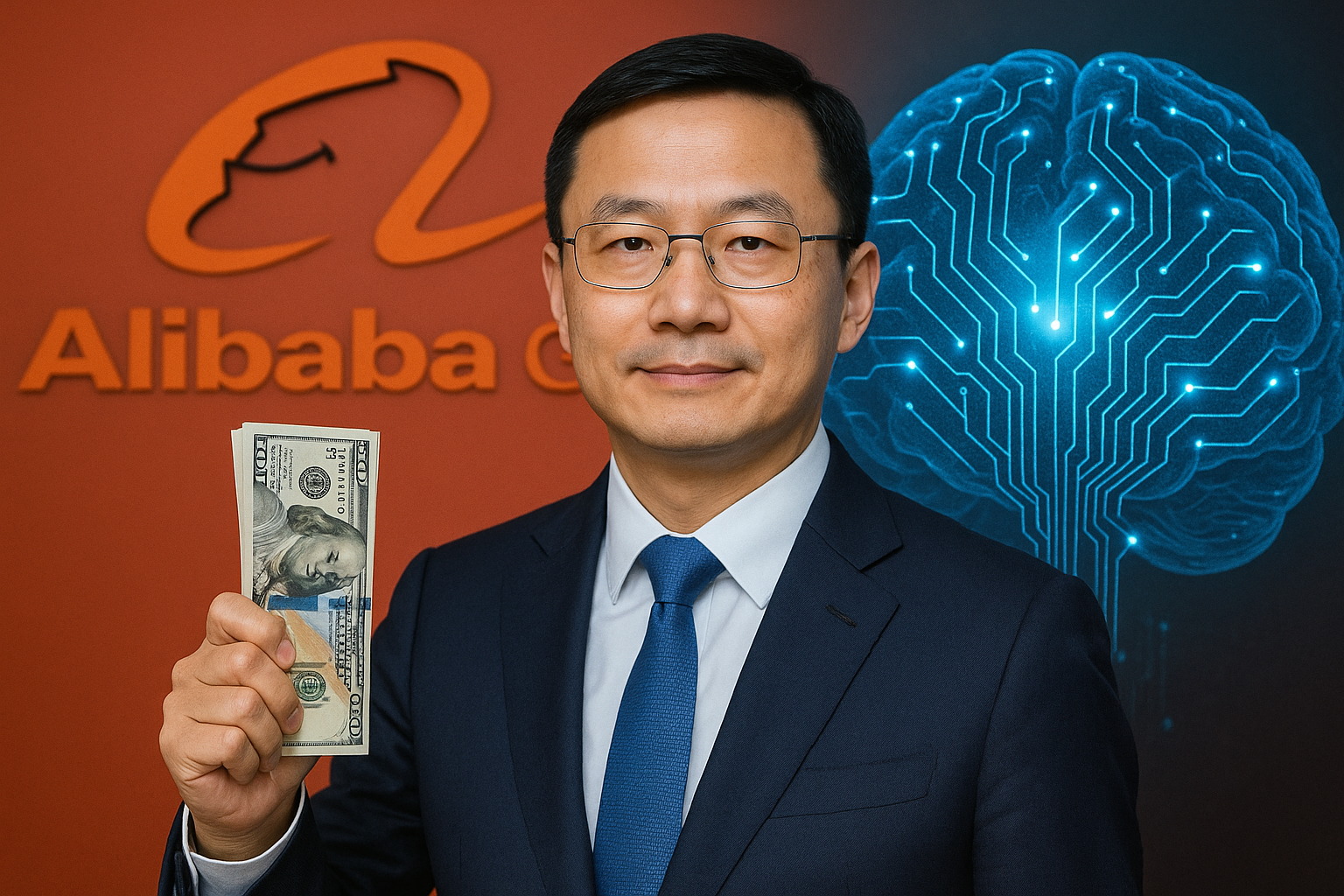
Alibaba’s chairman and CEO bought more than $15 million of shares after the company raised $10.2 billion to fund its AI infrastructure plans, a sequence that gives investors a useful case study in how to read insider buying alongside dilution.
At first glance, the purchase looks like a straightforward signal of confidence. A top executive adding to a personal stake after a major financing can suggest that management believes the company’s strategy is worth backing with real money. Here, that interpretation is strengthened by the timing: the stock purchase came after a large capital raise tied directly to AI infrastructure, a spending area that has become one of the most closely watched in the market.
That said, the financing itself has an immediate downside for shareholders who already owned the stock. The new-share sale diluted existing holders, which means each old share now represents a slightly smaller ownership slice of the company than it did before the issuance. Investors therefore have to consider two effects at once: the company gained capital to support its AI plans, but shareholders accepted reduced proportional ownership in exchange.
This is why the move should not be read as if the insider buy somehow offsets the dilution. The two developments are related, but they are not the same thing. The chairman’s purchase is a personal act that can be interpreted as a sign of conviction. The share sale is a financing decision that affects the capital structure and ownership base. For investors, the question is how much weight to give each signal.
The size of the purchase matters here. Buying more than $15 million of shares is not a token gesture or a symbolic trade. It is a substantial commitment, and that can make the transaction stand out from the kind of routine insider activity that investors often skim past. When a chairman and CEO chooses to buy at that scale shortly after a major fundraise, the move can reasonably be viewed as a deliberate message about confidence in the company’s direction.
Still, the purchase should be read in context rather than in isolation. Alibaba just raised $10.2 billion for AI infrastructure, which shows that management is willing to commit significant resources to that strategy. The chairman’s buy may reassure investors that leadership is aligned with the decision to spend heavily on AI. But the financing method matters too. Because the company used new equity, current holders absorbed dilution immediately, and that dilution is not erased by the insider purchase.
That creates the basic tension investors need to weigh. On one side is strategic ambition: the company has chosen to raise a large amount of money to support AI infrastructure, implying that management sees this investment as important enough to justify a major financing. On the other side is shareholder cost: the issuance reduces the ownership percentage of existing holders. Depending on how investors view the likely payoff from AI spending, the same sequence can feel either encouraging or frustrating.
For long-term investors, the most practical takeaway is that the chairman’s buy offers evidence of insider confidence, but not a guarantee of success. It is a positive sign that the company’s top leader was willing to add to his stake after the financing. It is also a reminder that the company is prioritizing AI infrastructure enough to dilute shareholders in order to fund it. Those two facts can coexist.
Investors who believe AI infrastructure spending can create meaningful future value may see the financing as a necessary step and the insider purchase as an added vote of confidence. In that view, the dilution becomes the price of pursuing a strategic opportunity. Investors who are more concerned about the effect of new shares on ownership may still appreciate the signal from the chairman’s buy, but they may not see it as enough to fully offset the dilution.
That is why the most balanced reading is neither fully bullish nor fully bearish. Alibaba’s chairman and CEO buying shares after a $10.2 billion AI funding deal is a constructive signal, especially because the purchase was sizable and came after a financing tied to a major strategic priority. But the new-share sale also means existing holders now own a smaller piece of the company than they did before. Both parts of the story matter.
In short, investors should view the transaction as a sign that Alibaba’s leadership has confidence in the company’s AI infrastructure plans, while also recognizing that the capital raise came with dilution. The chairman’s purchase may help support the case that management believes the strategy is worthwhile, but the ownership impact of the new shares remains an important part of the equation.